
By Rob Kendall, Urban Conservationist
Why temporarily stabilize?
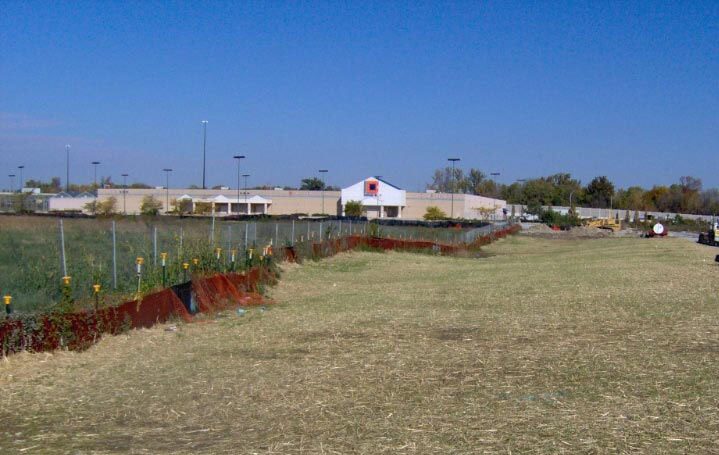
To minimize the exposure of bare soil to the erosive effects of precipitation and run-off. Temporary and permanent surface stabilization are considered the most effective means of minimizing erosion. Stabilizing the soil surface and reducing the potential for erosion is considered the most effective form of sediment control.
What areas need temporary stabilization?
Non-vegetated areas shall be temporarily stabilized if areas are planned to remain inactive for more than seven days. Areas will be considered inactive when there is no meaningful work toward accomplishing a pay item in an area with soil disturbance. Areas that have been compacted are excluded from temporary stabilization needs ONLY IF the areas are planned to be impervious surfaces associated with the final land use. If so, the area’s run-off must be directed to appropriate sediment control measures for adequate filtration.
Methods of temporary stabilization
- Mulching
- the application of plant materials to protect vegetative establishment and minimize erosion potential.
- Popular material: Straw and mulched wood chips
- Anchoring methods:
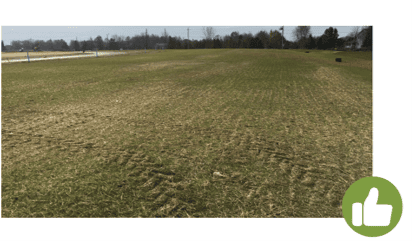
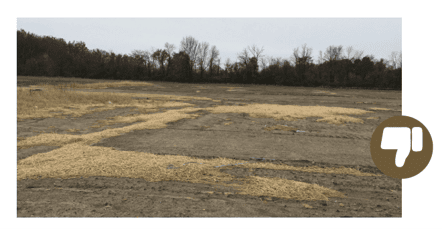
- Crimp or punch the straw two to four inches into the the soil; along contour of slope if applicable
- Cleating with dozer tracks
- Hydromulcher
- Synthetic tackifier, or soil stabilizer
- Netting with staples
- the application of plant materials to protect vegetative establishment and minimize erosion potential.
- Erosion Control Blanket
- a mulch incorporated within a biodegradable, photo-degradable, natural fiber, or similar netting material. It is an alternative to loose mulch and normally used on slopes and in concentrated flow channels.
- Blanket Materials: Organic (straw, excelsior, woven paper, coconut fiber, etc.) or synthetic mulch
- Anchoring methods:
- Staples
- Pins
- Stakes
- Temporary seeding
- Involves the establishment of quick germinating annual grasses or small grains to stabilize disturbed areas until a permanent soil cover can be established.
- Popular temporary seeds in Indianapolis construction sites (Refer to Table 1)
- Winter Planting Methods (Utilizes brief warm periods during the winter for germination)
- Seeding in the winter is very species dependent, but once you pick a species for your application date, you can utilize the following options:
- Dormant seeding is a temporary or permanent seeding application at a time when soil temperatures are too low for germination. Preventing seedlings from experiencing frost that could decrease survivability.
- Frost seeding is a temporary or permanent seeding application in late winter when soils are in the freeze-thaw stage. Allowing seeds to work into the soil and begin germination as temperatures raise.
- Seeding in the winter is very species dependent, but once you pick a species for your application date, you can utilize the following options:
Note: All stabilization methods must include either mulching or erosion control blankets for soil protection!
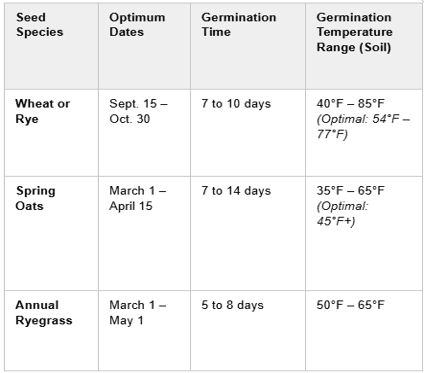
Table 1: Detailing the optimal dates, germination time and temperature for commonly used temporary seeding varieties
Tips to avoid noncompliance
- All erosion control measures should be installed according to manufacturer’s and/or SWPPP specifications
- Red-line your SWPPP with deviations that are compliant with the below Compliance Resources or reach out to MCSWCD.
- Continue routine inspections to catch destabilizing areas early.
Compliance Resources: