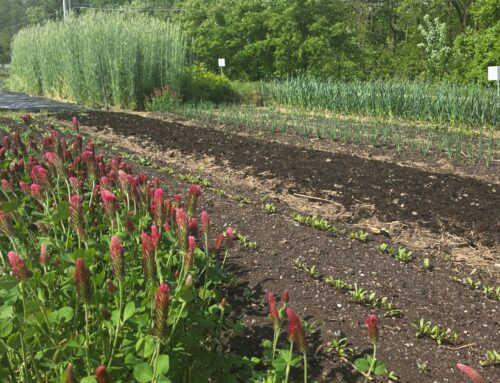


The new Conservation Crop Rotation Tool for Small Farms and Gardens is designed to help farmers, gardeners, and conservation professionals understand crop rotation principles and plan crop sequences. Access the tool on our Soil Health webpage under the Crop Rotation section.
Well-planned crop rotations offer numerous benefits, including reducing disease, weed, and insect pressure; improving crop nutrition and soil structure; and making crop management easier. An excellent resource for making crop rotation decisions is SARE’s Crop Rotation on Organic Farms: A Planning Manual.
The new tool does not replace the wealth of information in the SARE manual. Instead, it serves as a companion resource, making the manual’s crop sequence table interactive. Users can select a vegetable, flower, or cover crop and explore the advantages and disadvantages of planting it before or after other crops.
The tool includes a list of commonly grown vegetables, flowers, and cover crops, along with their plant families. Users can build crop sequences and receive flags when a sequence may increase the risk of certain crop diseases, helping them identify potential conflicts and make more informed rotation decisions.
The tool was developed by Kevin Allison (Marion County Soil & Water Conservation District) and Elli Blaine (Indiana Small Farm Conservation), with support from conservation partners and input from growers. The tool also serves as Indiana’s implementation requirement for NRCS Indiana conservation programs.
This work is supported through the USDA-Natural Resources Conservation Service, Marion County Soil and Water Conservation District, Indiana Small Farms Conservation, North Central SARE, and Clean Water Indiana. The USDA-NRCS is an equal opportunity provider, employer, and lender. This material is based upon work that is supported by the National Institute of Food and Agriculture, U.S. Department of Agriculture, under agreement number 2024-38640-42989 through the North Central Region SARE program under project number ENC24-233. USDA is an equal opportunity employer and service provider. Any opinions, findings, conclusions, or recommendations expressed in this publication are those of the author(s) and do not necessarily reflect the view of the U.S. Department of Agriculture.