
By John Hazlett, District Manager
My family and I recently moved to a new home from the east side to the north side of Indy, and I have been thinking a lot about what it takes to battle invasive plants in the home landscape. According to SICIM, over 86% of woody invasive plants in Indiana originate from landscape plantings, so anything we do at home can make a big difference collectively across the state to reduce the impacts of invasive plants on local ecology. We also have control over our private property landscapes, and this makes the battle against invasives more “winnable” from my perspective.
I’m very proud of the established native landscape my wife and I implemented at our east side home (and hope the next homeowner enjoys it too!). What we found at our new northside property is a litany of invasives, including winter creeper, maiden grass, asian bush honeysuckle, and English ivy. The age of the old and new homes is similar (built in 1948 and 1951, respectively), and the invasive species found at our new home reflect a traditional approach to landscaping that included the introduction- both intentional and unintentional- of many invasive species. As we look to replace invasives with natives, I thought it might be helpful for others if I chronicled our process through periodic blog entries. So here goes nothing….
We’ve been at the new house for about two months during the prime growing season and initially walked the yard to inventory invasives and determine which ones we wanted to tackle first. We decided to address small sections of the yard and think about what native species we’d eventually like to replace the invasives with.
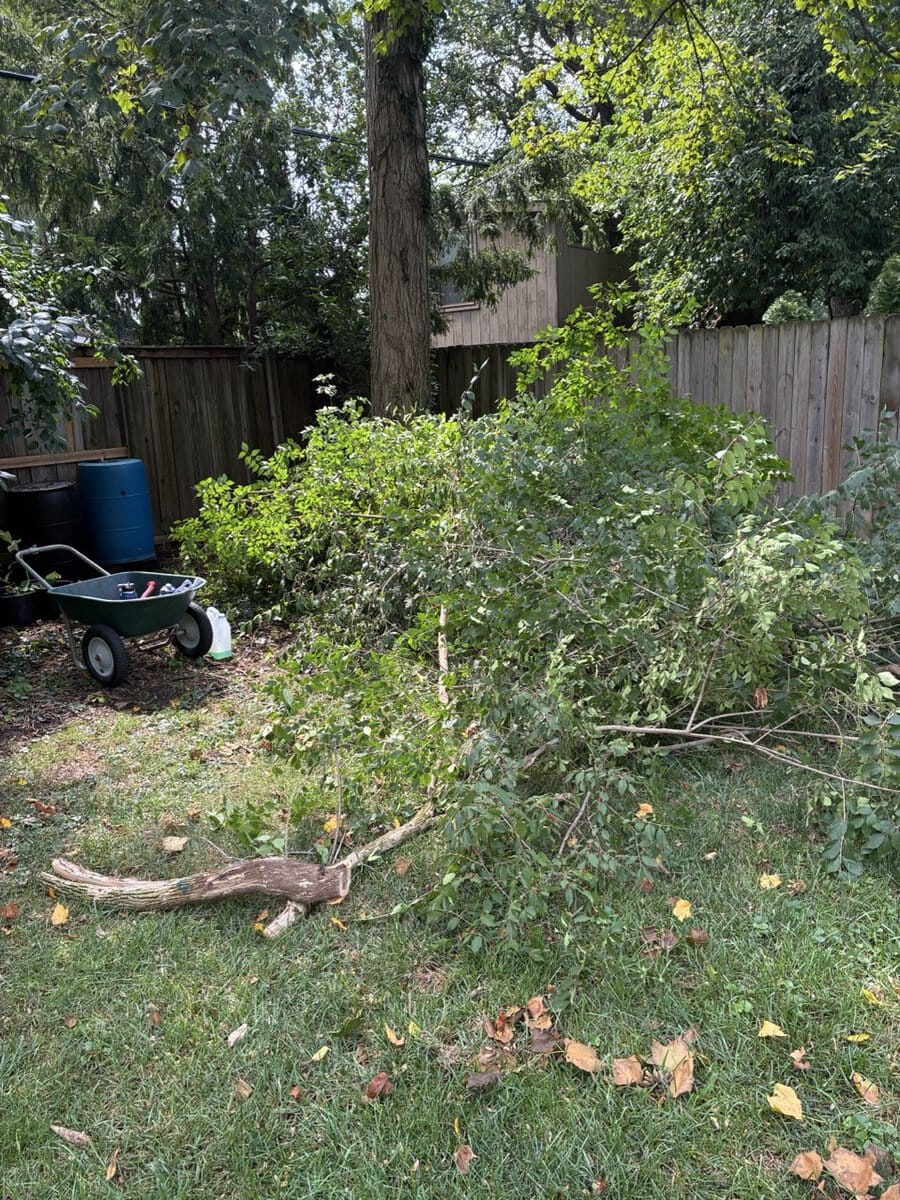
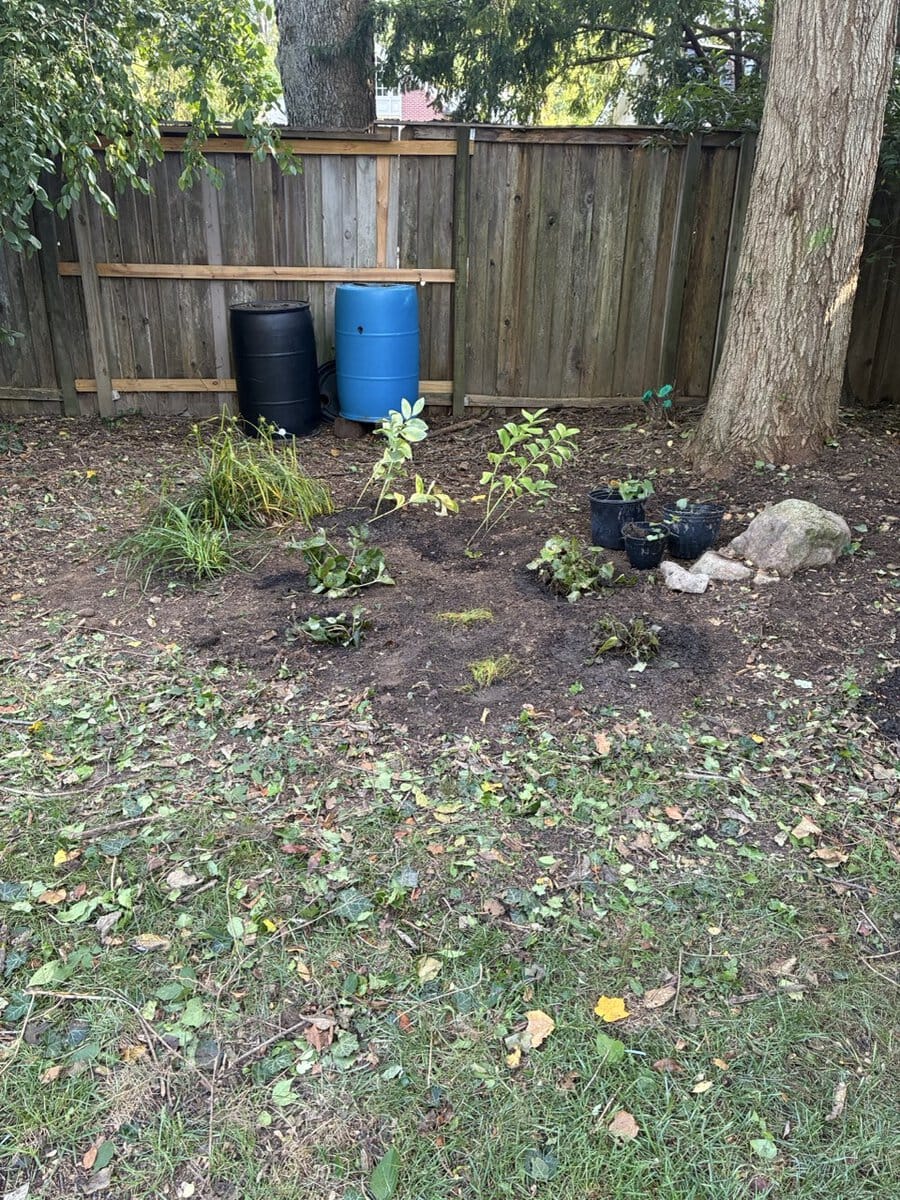
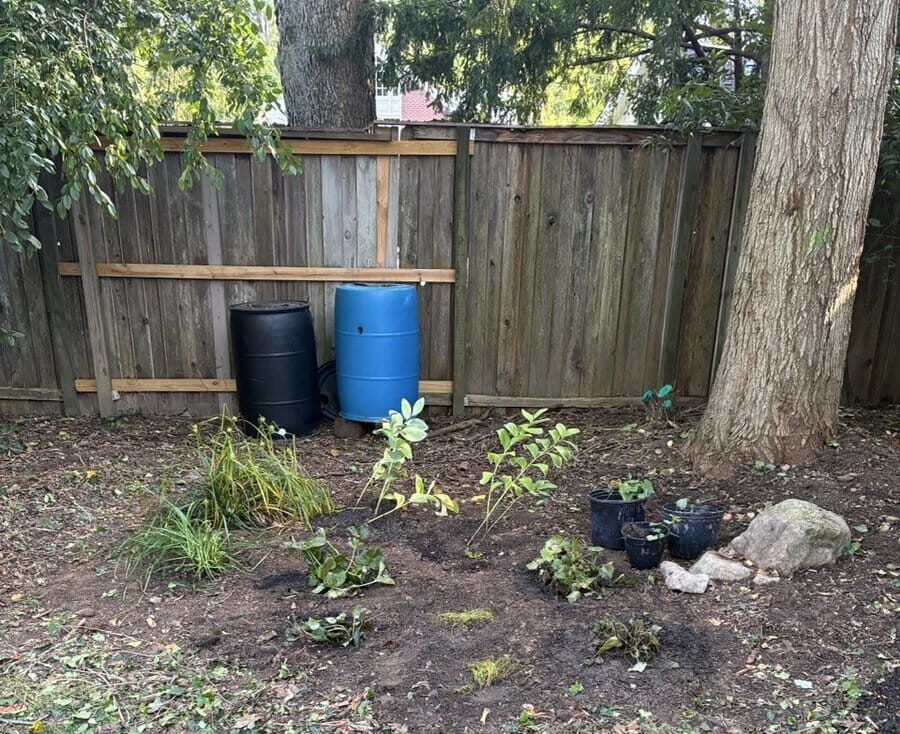
It’s very helpful that my wife is a Landscape Architect and will eventually draw up plans for different areas. To begin with though, we decided we wanted to introduce several of our favorite woodland groundcovers that worked well underneath a Japanese Maple tree (yes, not everything was native) at our eastside home-these included Wild Ginger, Solomon’s Seal, Burr Sedge, and Wood Sedge. Initially, I decided to focus on a corner of the yard near a Black Maple tree where english ivy and a large honeysuckle shrub were well established. To make things easier, I cut down the honeysuckle with a handsaw and immediately painted the stumps with Aquaneat, a water safe glyphosate product I mixed with blue dye to make sure I knew which shrubs had been treated. This is called the cut stump method and is detailed HERE.
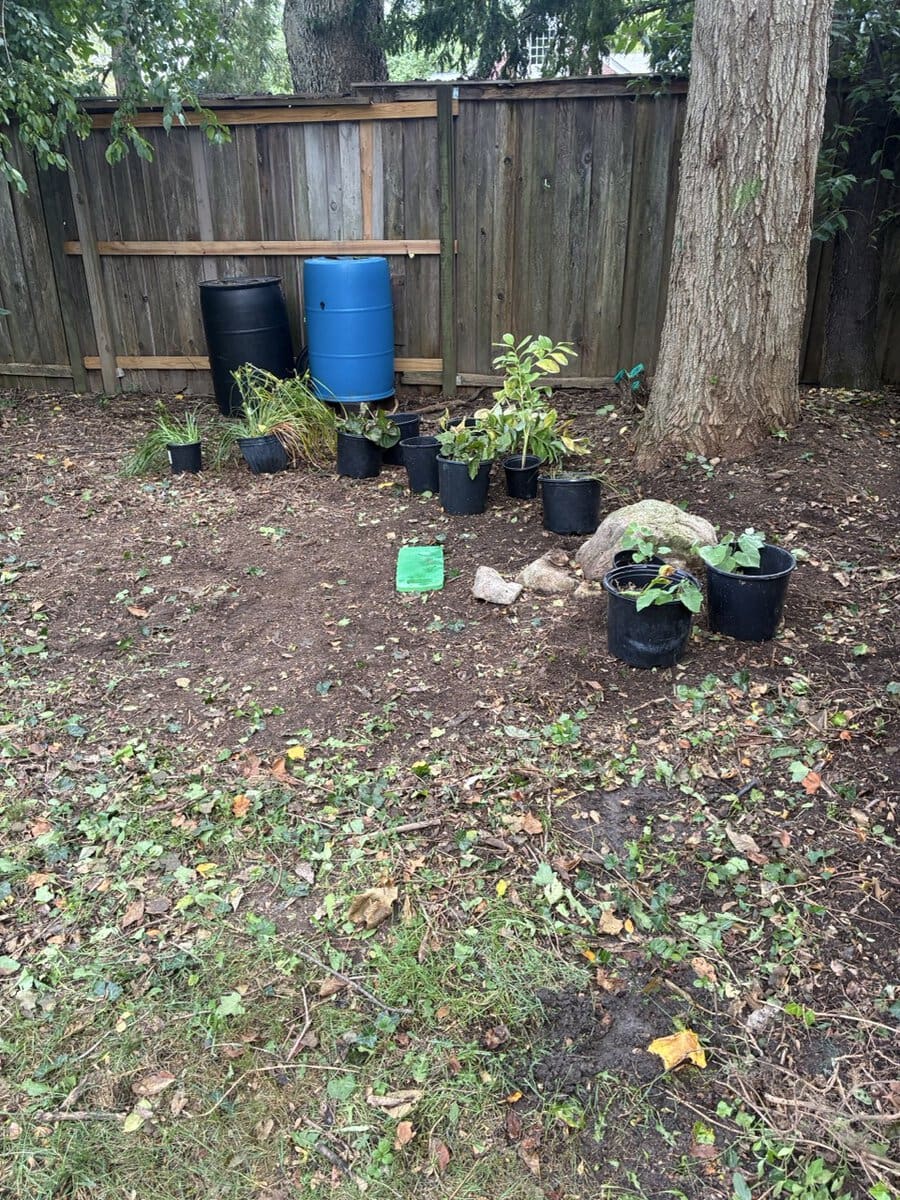
I piled the honeysuckle and cut it into smaller pieces to go in my trash can, making sure I had cleaned up all the berries that had fallen to the ground. I then started pulling the english ivy off the ground and was careful to not pull it off trees, instead cutting it at the base so the portions on the tree will die and fall off. Finally, I planted the various woodland groundcovers I mentioned earlier. The small stump painted in blue in the above picture is the treated honeysuckle; the Aquaneat won’t persist in the soil and will shut down the plant. I was careful to wear gloves and wash my hands well after the application. I’ll check for any re-sprouts next year and will treat those.
A few key points from this first restoration effort at the new property:
- Start small; the work indicated above took me several hours and luckily I had an extra trash bin to put invasive debris in. Make sure if you are disturbing and exposing soil that you have a plan for something to replace the ground previously covered with invasives! For the area where I was working, northern sea oats and beak grass also would have been appropriate species given the heavy shade under the Black Maple tree. Our property is about .5 acre and we anticipate this property wide conversion to ultimately take several years.
- Make sure you have a source of water nearby if you are replacing invasives with natives.
- Treat woody invasives immediately after cutting. I prefer the cut stump method described above due to the efficacy-consult the calendar of control on the SWCD invasives page mentioned earlier for more information on appropriate timing and chemical for each invasive species. The calendar of control will make sure you are targeting invasives with the appropriate method.
Stay tuned for the next blog update here in a few months!