

Winterkill Cover Crops
Cover Crop Strategies
Winterkill cover crops are a go-to for both beginners and seasoned growers. Benefits include quick growth, weed suppression, nutrient scavenging, and soil coverage. When fall planted in Indiana, species such as oats and field peas typically winterkill, or are terminated by cold temperatures and frost. The dead mulch covers the soil surface throughout winter to improve soil health and prevent erosion. Winterkill mixes are great before next year’s early spring vegetables because they terminate on their own during winter.
The Marion County SWCD Demonstration Garden uses winterkilled cover crops to prepare for the garden beds for beets, brassicas, carrots, lettuce, onions, snap peas, and spinach. If using before later planted vegetables, ensure continued weed suppression by mulching up and/or tarping.
Instructions
- Plant a winterkill cover crop mix between August 15 and September 30. Plant into a weed free garden bed. Refer to Indiana Cover Crop Seeding Windows for detailed seeding dates.
- The cover crop grows in fall and early winter. Expect more growth from cover crops planted earlier. In late winter, the mix winterkills.
- Continuously scout and remove any weeds.
- In March, if the area is weedy, tarp the area for approximately 6 weeks to terminate weeds before planting vegetables.
- Rake aside dead cover crop aboveground biomass into walkway. Leave the soil and roots undisturbed.
Weed whack or mow the oat mulch to facilitate raking, if needed. - Add compost and lightly rake bed smooth to reform the bed top.
- Plant vegetables by seed or transplant.
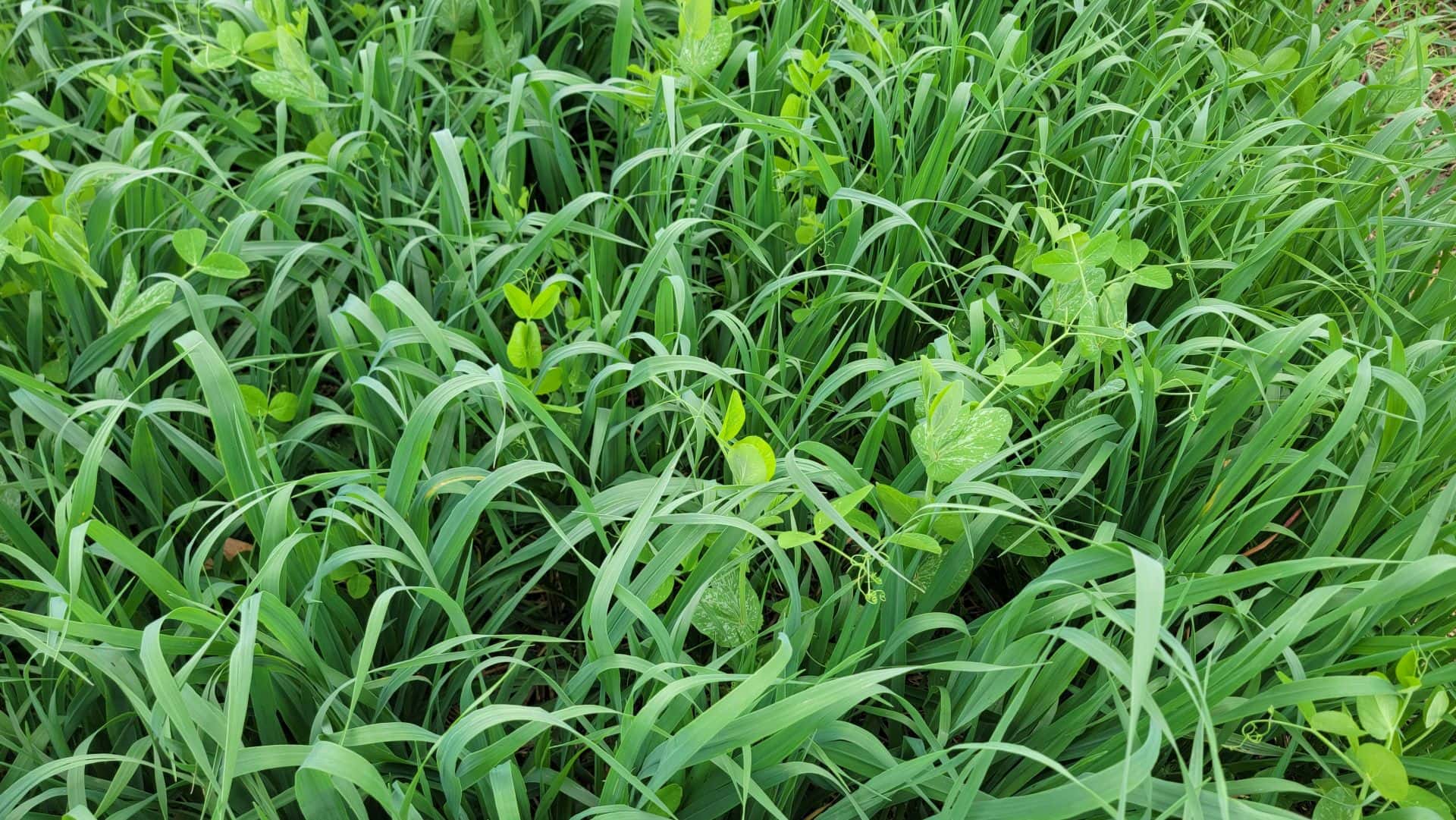
Oats and Field Peas
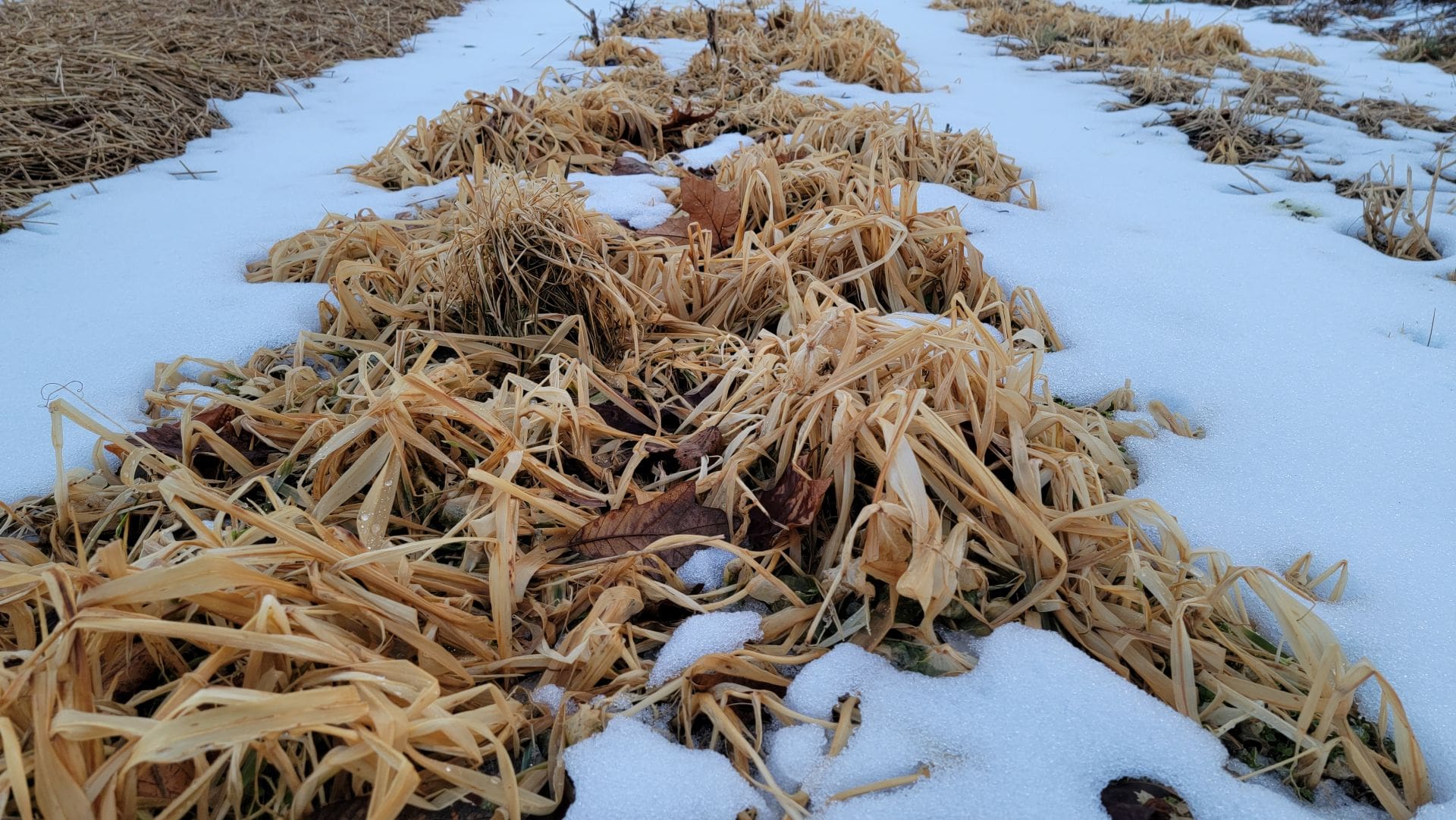
Winter-killed oats
Winterkill Cover Crop Species
Fall-planted winterkill cover crop options in Indiana include oats, field peas, oilseed radish, flax, and phacelia.
A commonly used mix is oats and field peas. The balance of a grass and a broadleaf legume promote soil biodiversity and work together to suppress weeds.
Keep in mind the crop rotation to prevent disease buildup. For example, if a garden bed has recently grown or will soon grow brassicas, keeping radishes (brassica) out of the mix is best practice.
Winterkill cover crops are most often planted in the fall after vegetable harvest. Some summer cover crops also winterkill, but this page focuses on the fall-planted cover crops. Interseeding under existing crops is doable but oats tend to not perform well in shade or low-moisture and germination and growth may be hindered.
The Indiana Cover Crop Seeding Windows, is a helpful table of common cover crop species and their suitable planting windows. The Indiana Cover Crop Seeding Methods for Small Farms and Gardens contains guidance on how to plant cover crop seeds.
The Indiana Cover Crop Table contains a list of winterkill species and seeding rate guidance per 100 square feet. Seeding rates can be adjusted based on goals. For more mulch, use a high rate of oats as they provide a thicker, longer-lasting mulch than field peas or radishes. For less mulch and a higher nitrogen contribution, use a low rate of oats and a high rate of field peas.
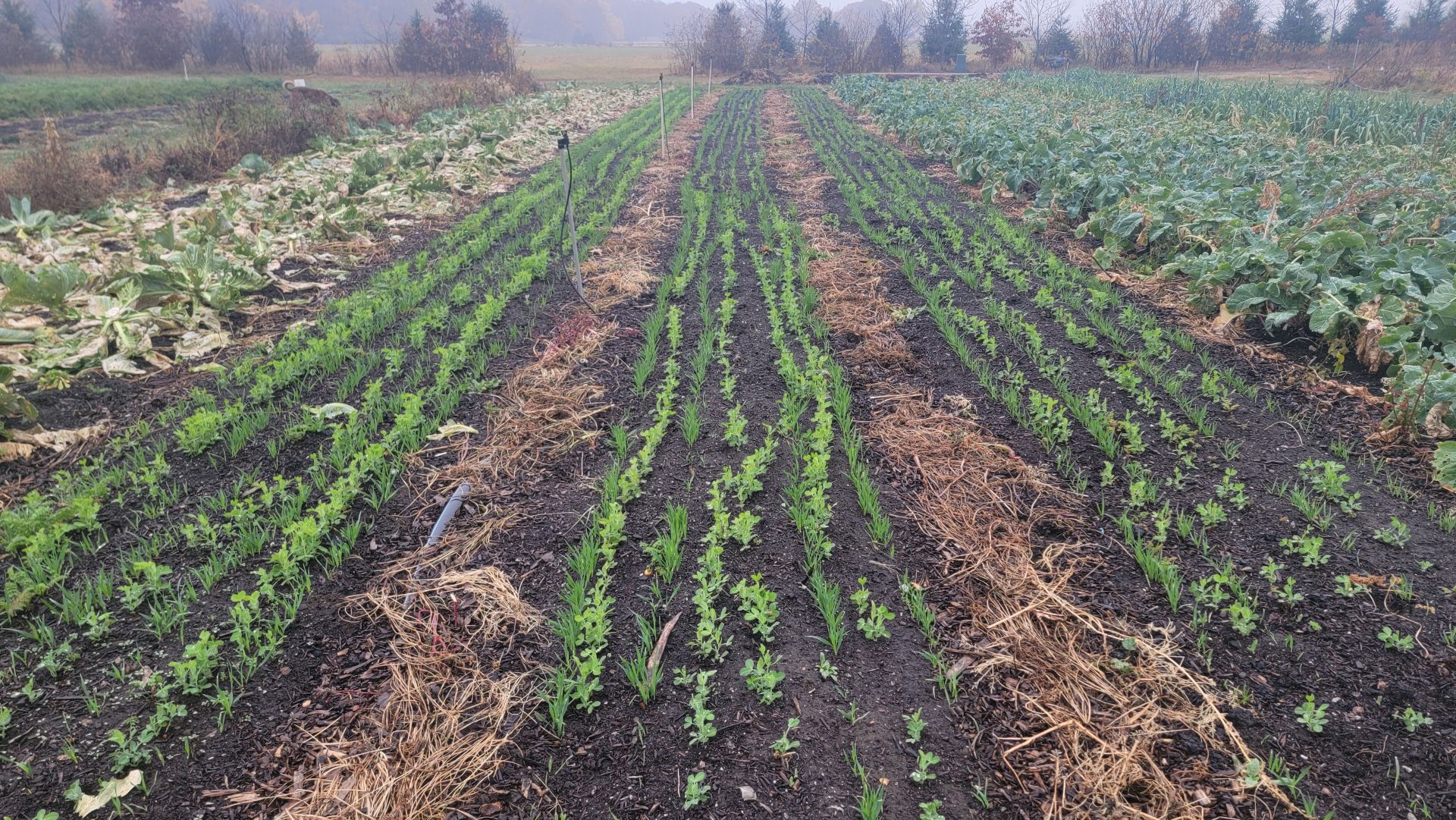
Oats and field peas, planted with a push seeder
Winterkill Cover Crop Mulch
The cover crops grow in fall and then die under winter’s cold temperatures and frost. The dead cover crops then serve as mulch for the garden bed.
The species of cover crops and timing of planting affect the type of mulch left behind.
Cover crops with higher carbon to nitrogen ratios such as oats will generally produce longer lasting residues that cover the soil further into spring. Field peas and oilseed radishes have lower carbon to nitrogen ratios and decompose more quickly, which could lead to bare and unprotected soil if planted alone.
If planted earlier in their seeding windows, winterkill cover crops have more time to grow and produce biomass and mulch before winter termination.
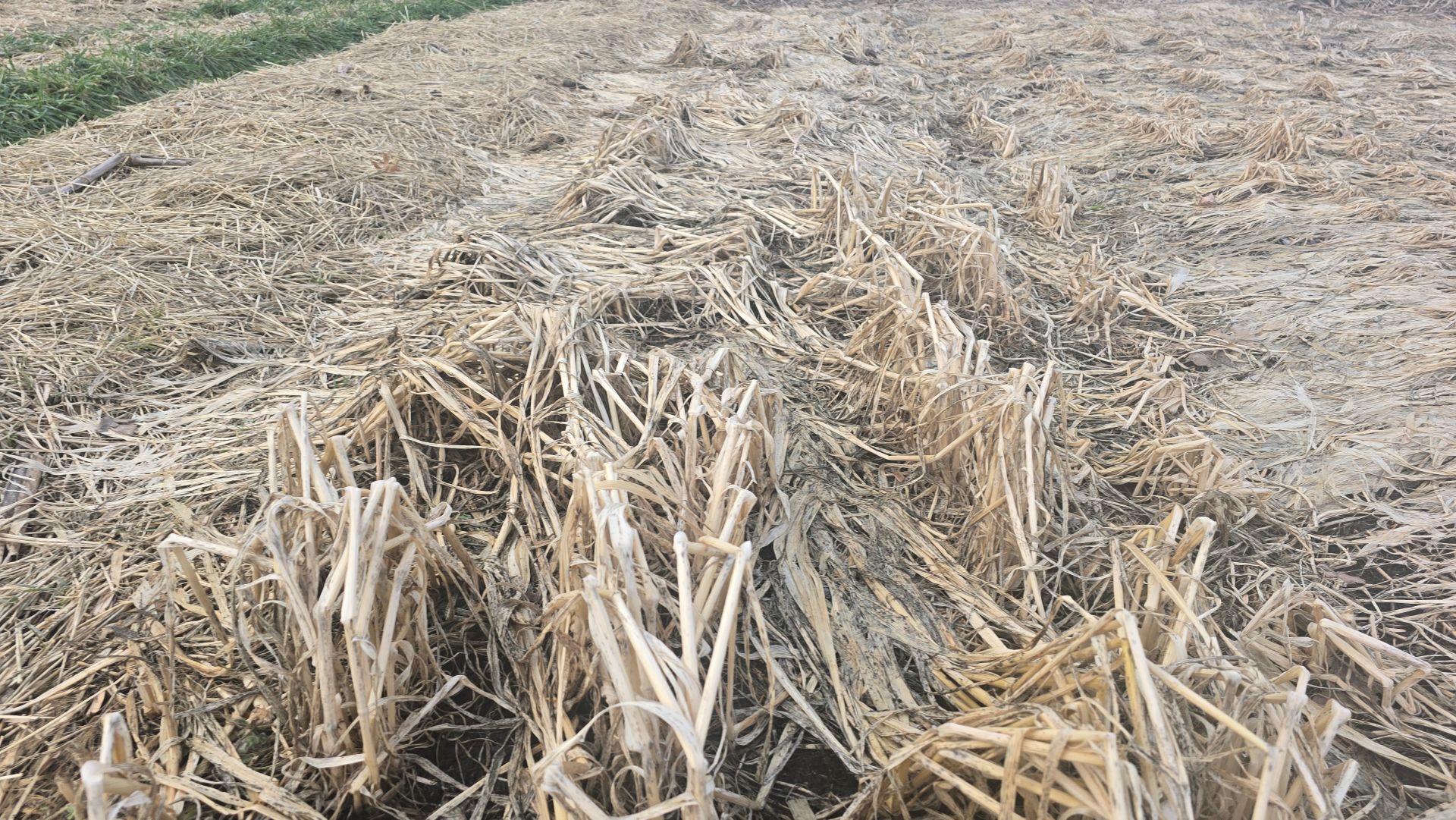
Thick mulch produced by a high rate of oats
Scouting and Weeding
A cover crop can greatly diminish the amount of weeds in a garden bed. Scout for and control the weeds that do persist within the cover cropped area. Ensure a weed-free planting bed for the next crop and try not to let any weeds go to seed. Options for weed control include but are not limited to hand pulling, a soil knife, hoe, and/or a tarp in late winter.
In late winter and early spring, the dead cover crops make it easier to see the green weeds. If the area is too weedy, tarp the area approximately 6 weeks before planting vegeatbles or until weeds are terminated. Remove the tarp before crop planting and dig out any persistent perennial weeds.
Winterkilled cover crop species are not expected to survive freezing temperatures or frost.
If a warm Indiana winter does not fully terminate the cover crop, resort to other termination methods such as mowing or tarping. Late-planted winterkilled cover crops may have an increased chance of surviving. Early planted oats may try to set seed before winter sets in. To avoid this, terminate them with other options such as mowing or tarping.
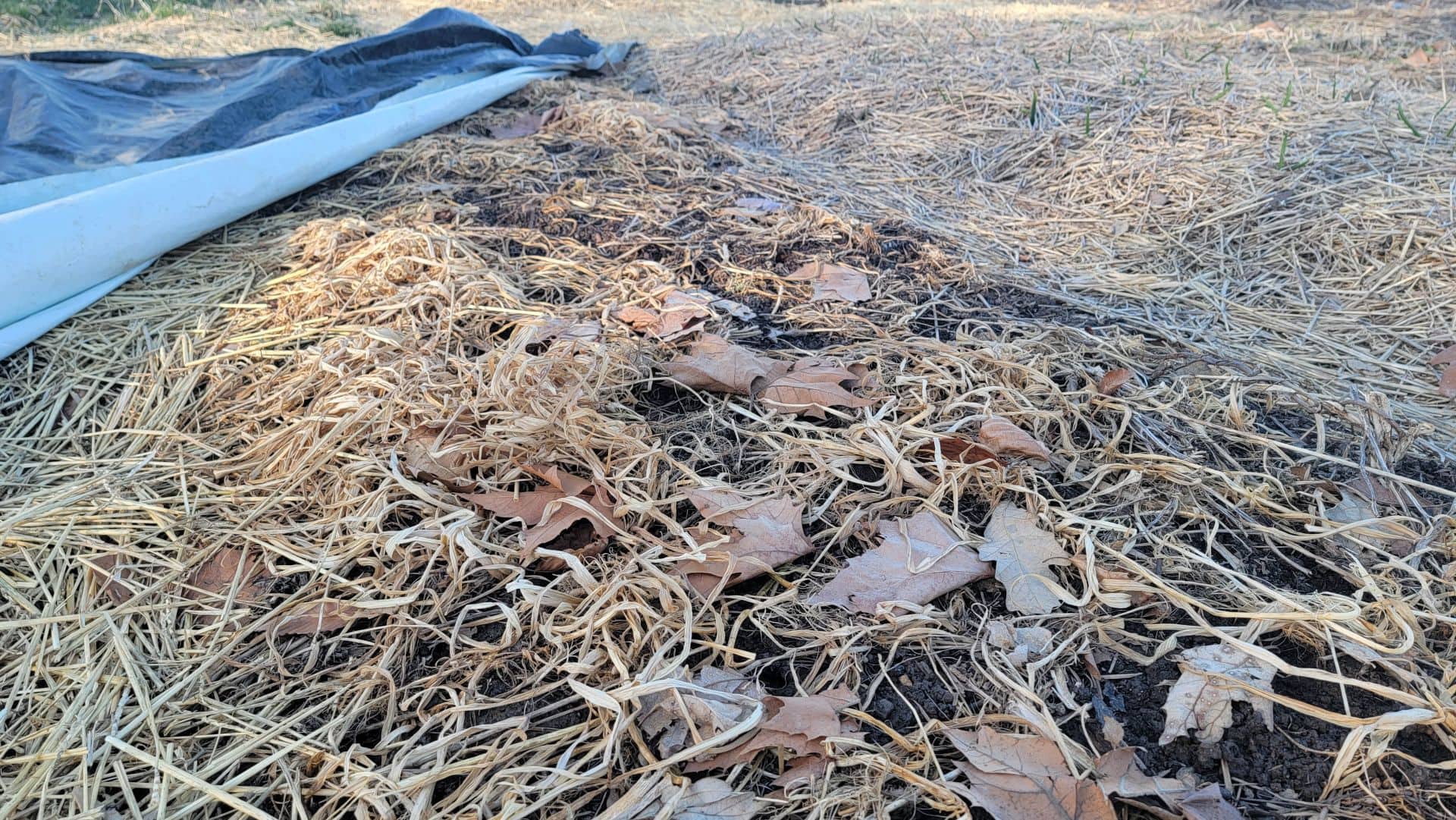
Removing the tarp after 6 weeks to ensure weed termination
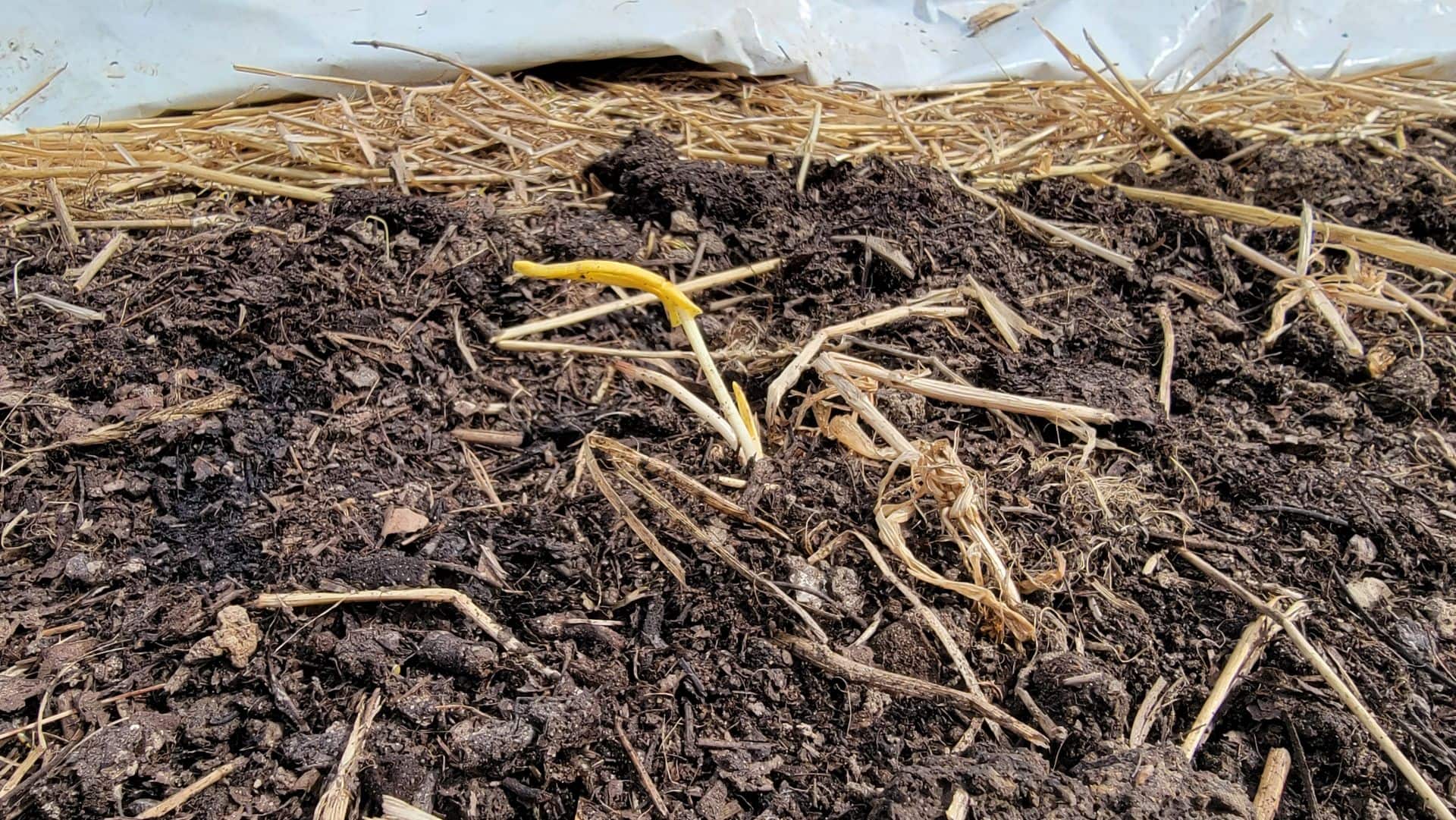
This perennial weed survived tarping and should be dug out.
Planting the Next Crop
In the spring, the brown residue of the dead cover crops can be left in place or raked into garden pathways. Leave the decomposing roots and soil undisturbed for soil health benefits.
Raking away the cover crop top growth can allow for more efficient vegetable seeding or planting. Weed whacking, mowing, and/or tarping can facilitate raking. If the brown cover crop is left on the growing bed, the light colored mulch may keep soils too cool for vegetable seed germination.
Before or after crop planting, add an additional top layer of mulch or compost to ensure 100% soil coverage and to suppress weeds.
Crops can be direct seeded or transplanted after a winterkilled cover crop. While larger seeded crops generally fair well when seeded into thicker mulch, many of the small seeded vegetables have higher germination rates in beds with less crop residue. Remove or rake off the mulch, add compost if needed, create furrows, and seed according to the crop’s seed depth recommendations. The planting method depends on the tools available, amount and type of mulch on the bed, and the crop being planted.
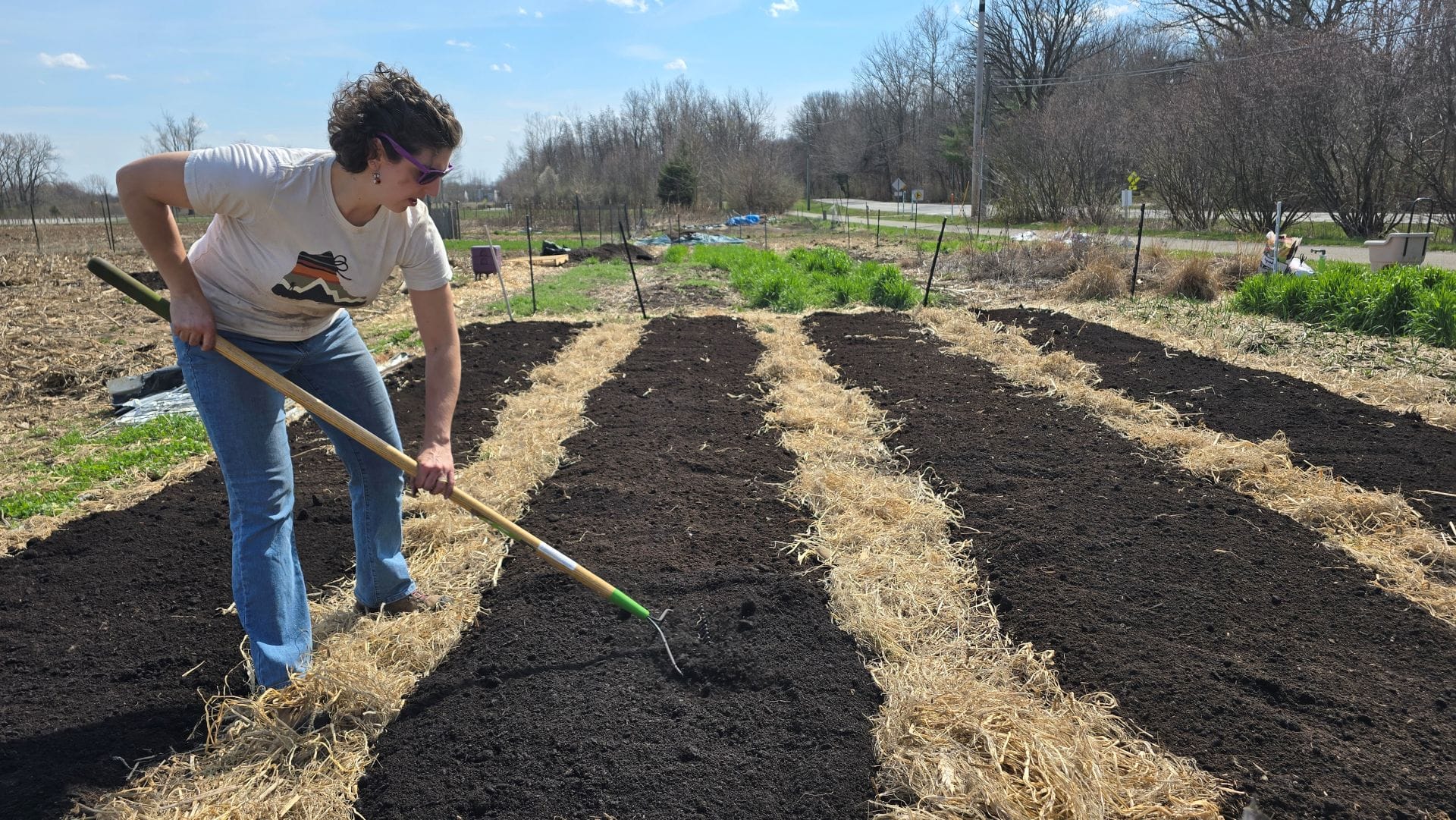
Raking cover crop biomass to walkways and mulching up growing beds with compost
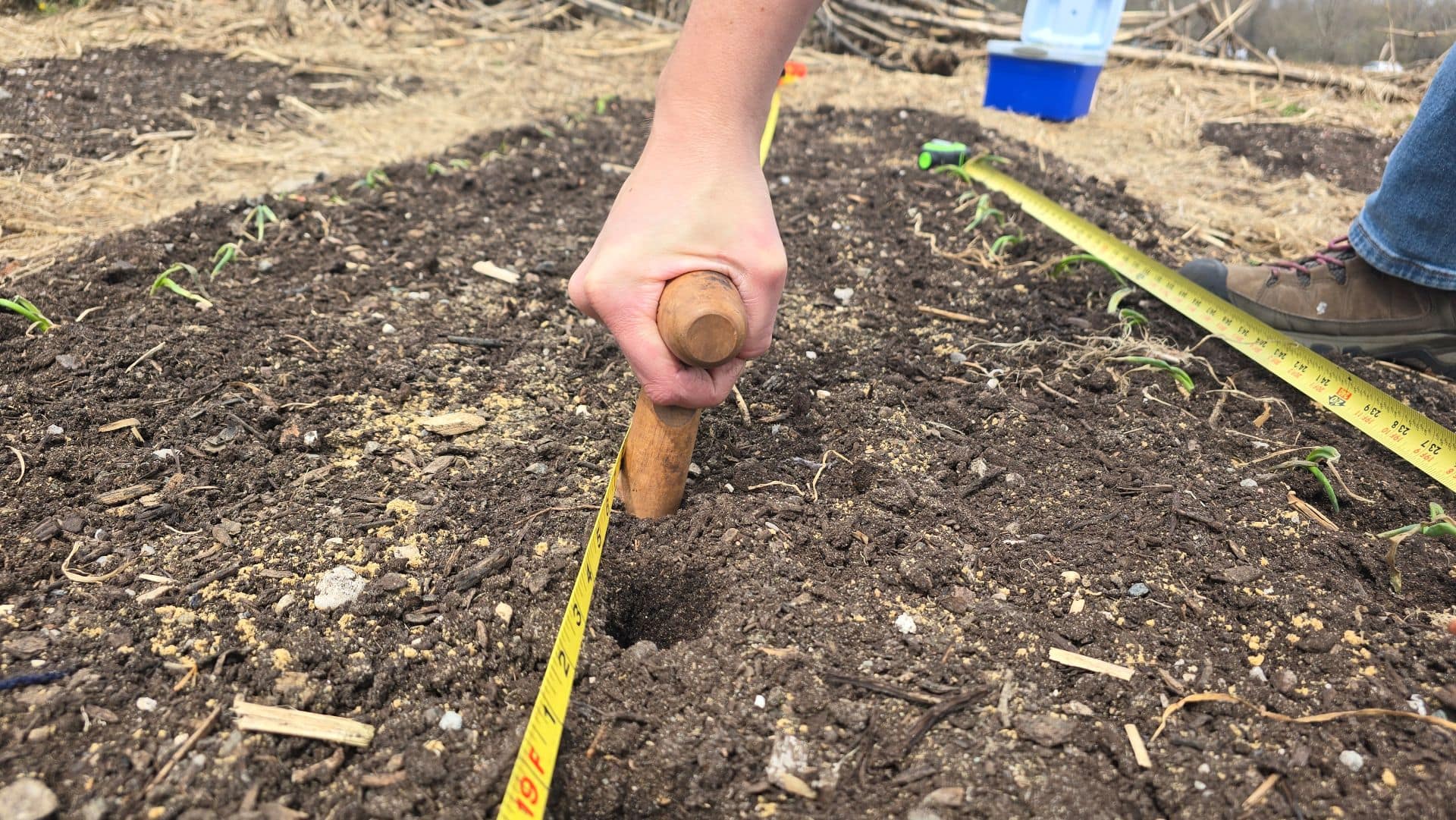
Dibbling for onion starts
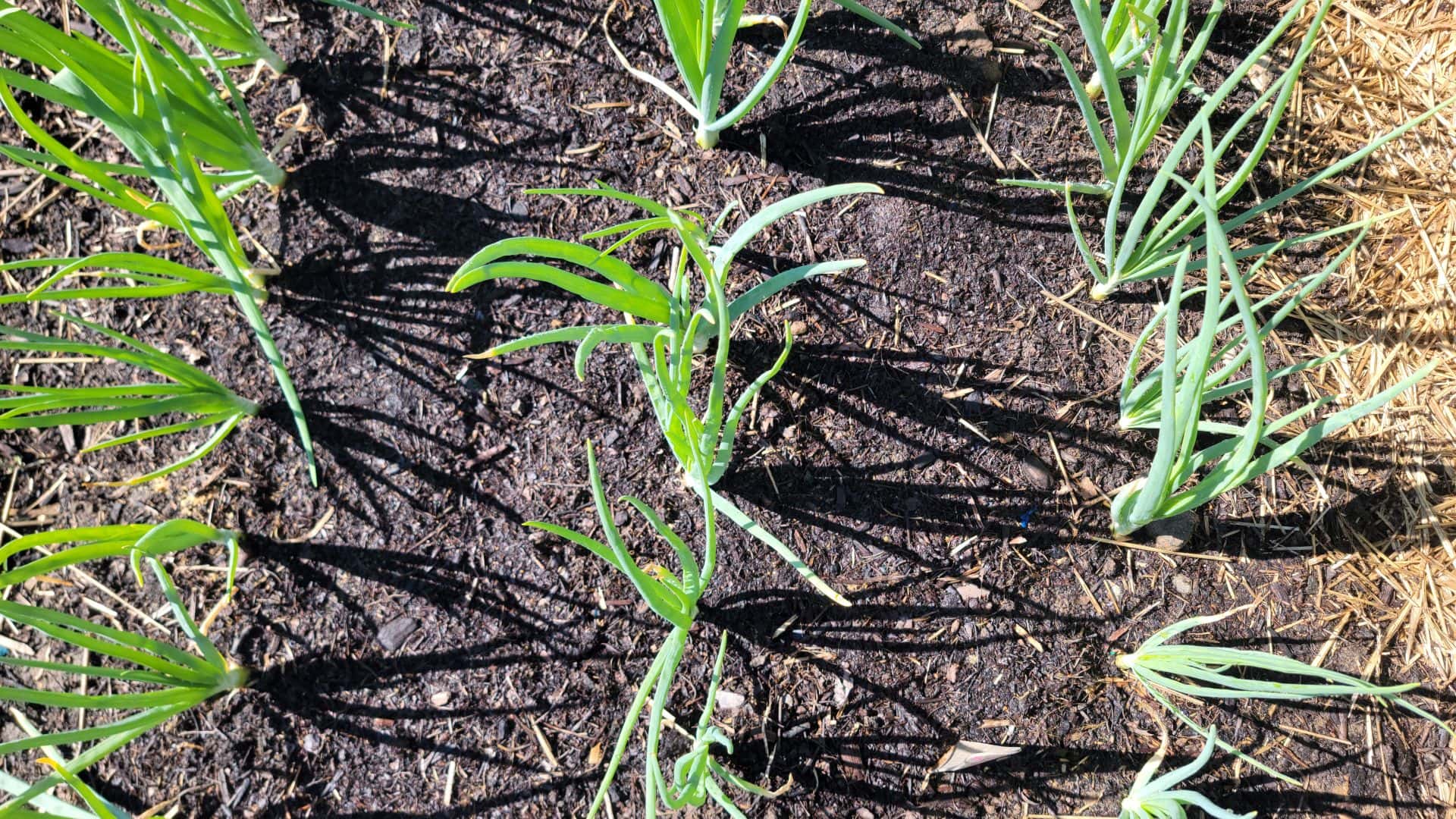
Onion growth
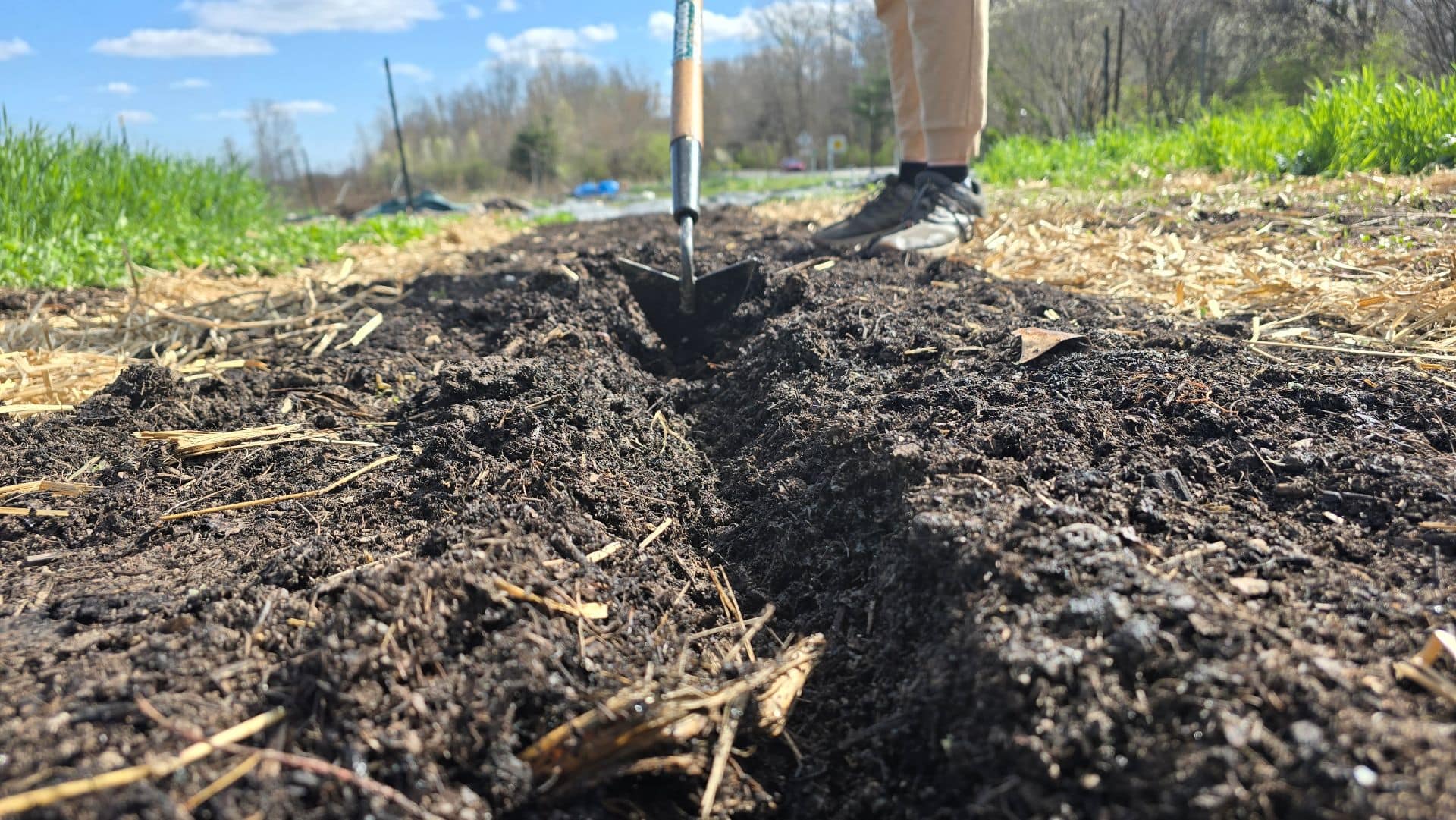
Furrowing for a direct seeding
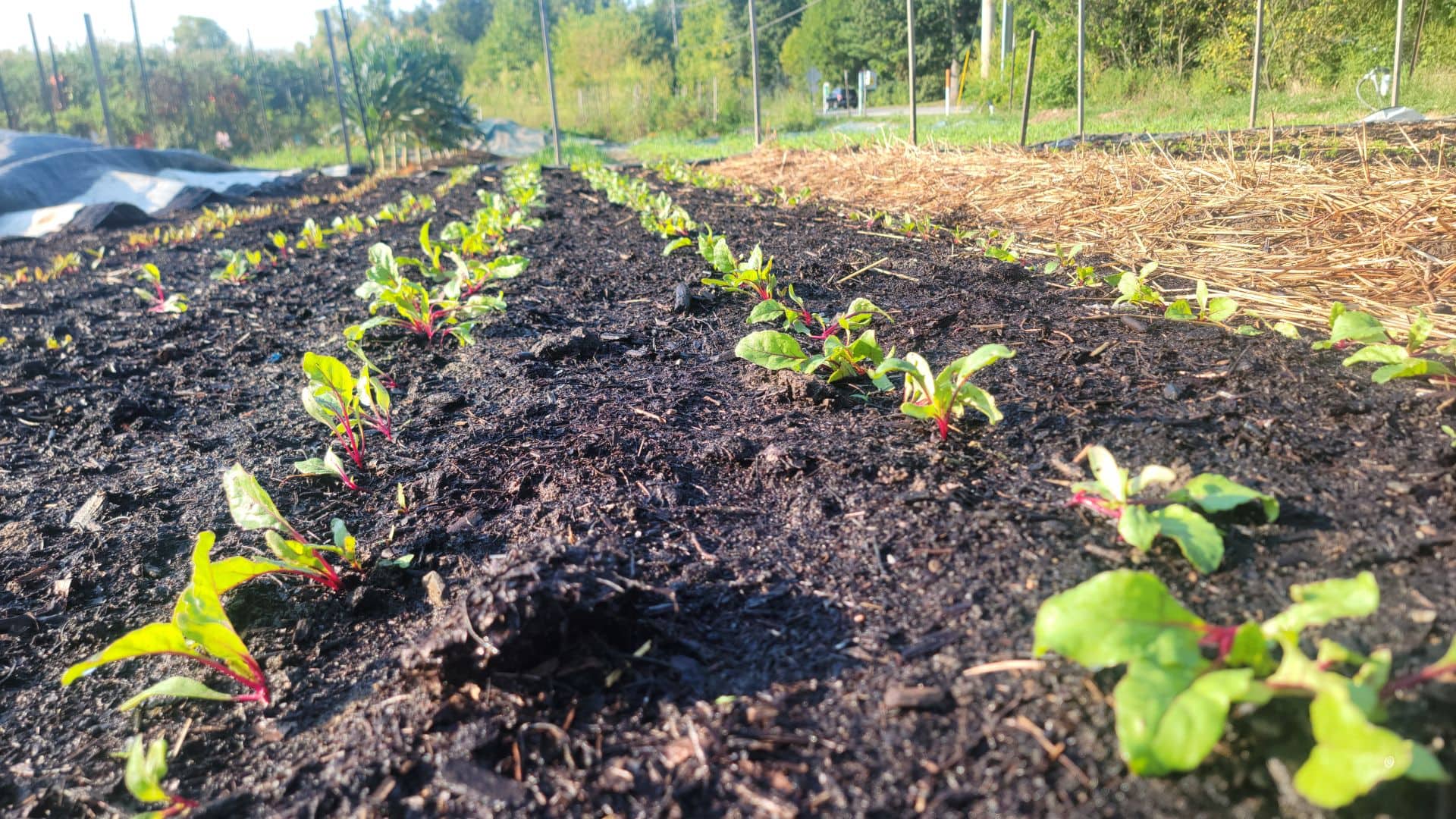
Direct seeded beets
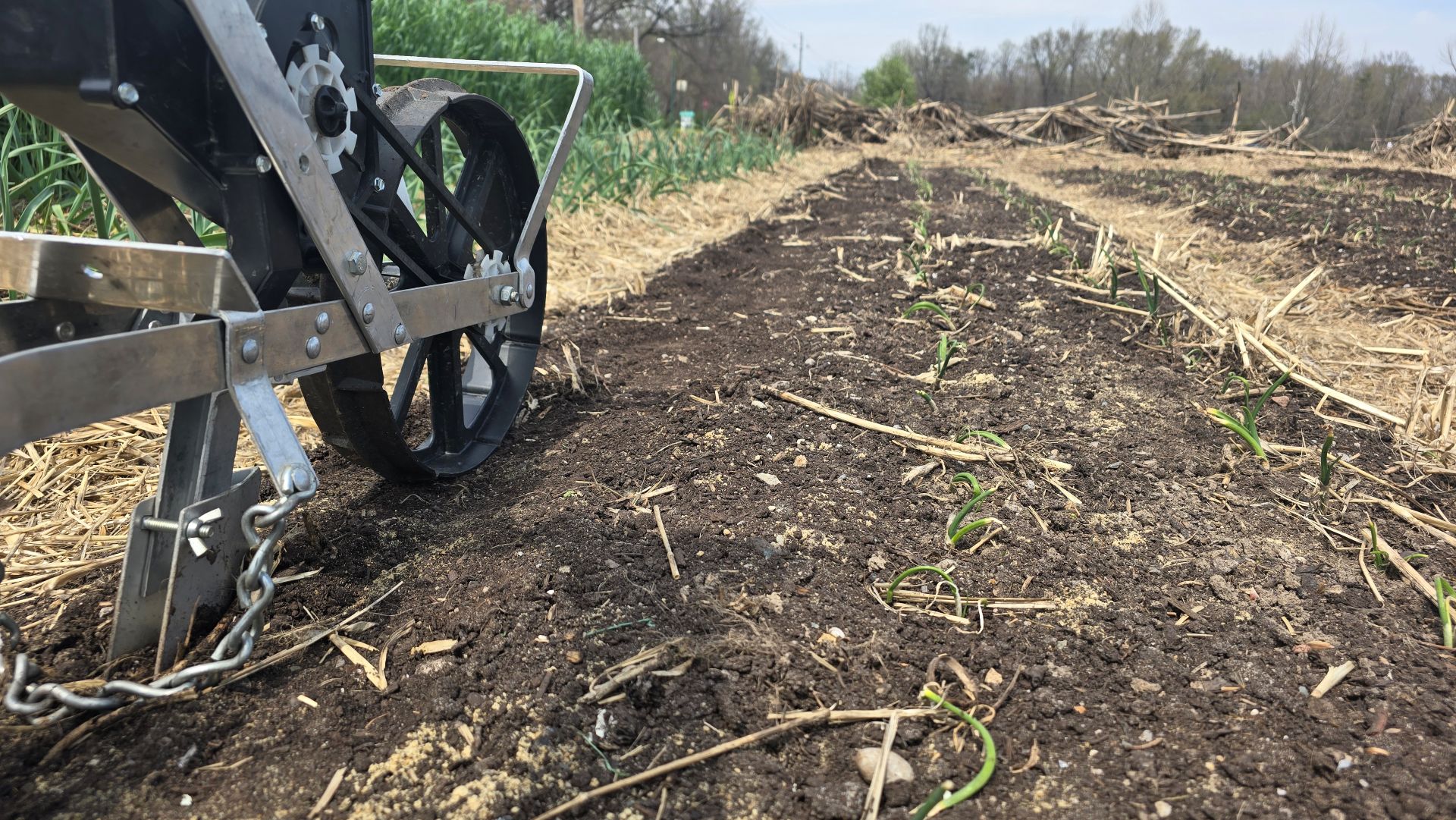
If planting the next crop with a push seeder, thoroughly rake off cover crop mulch to ensure a smoother planting
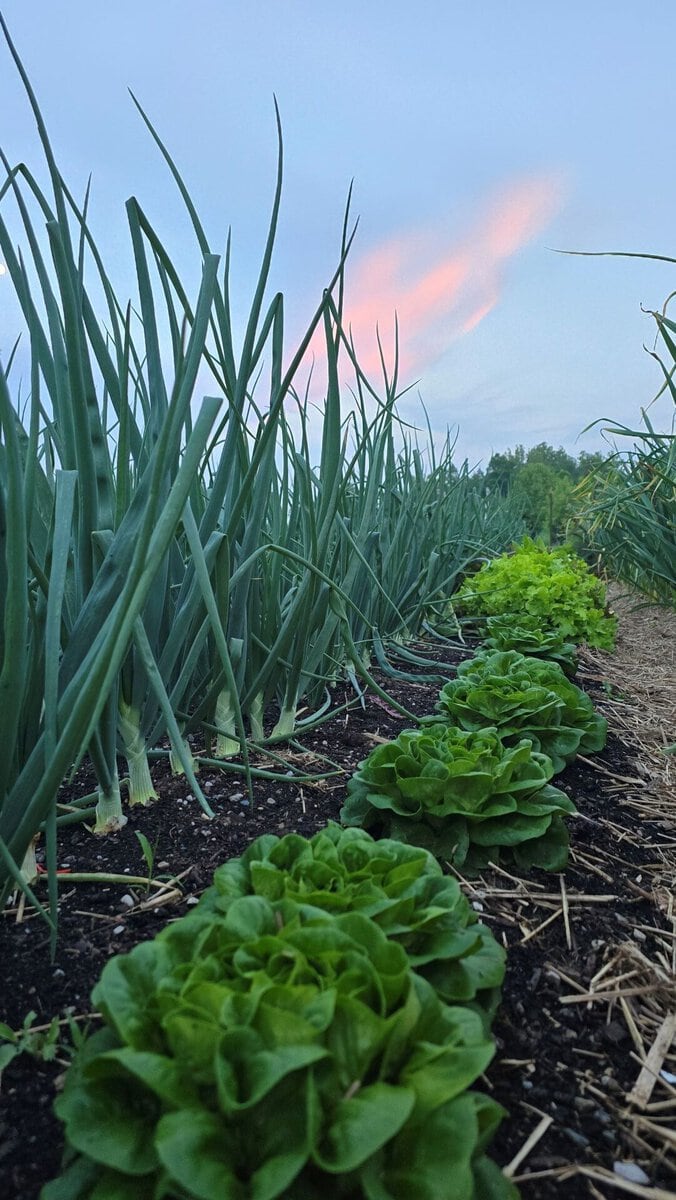
Lettuce and onions following a winterkill cover crop

Content and photography by Kevin Allison, Marion County SWCD
Produced in partnership with Indiana’s Natural Resources Conservation Service, North Central SARE, and Clean Water Indiana.
Updated July 2026
This work is supported by the Marion County SWCD, the USDA Natural Resources Conservation Service, Clean Water Indiana, and North Central SARE. This material is based upon work that is supported by the the National Institute of Food and Agriculture, U.S. Department of Agriculture, under agreement number 2024-38640-42989 through the North Central Region SARE program under project number ENC24-233. USDA is an equal opportunity employer and service provider. Any opinions, findings, conclusions, or recommendations expressed in this publication are those of the author(s) and do not necessarily reflect the view of the U.S. Department of Agriculture.