
By Kevin Allison, Soil Health Specialist
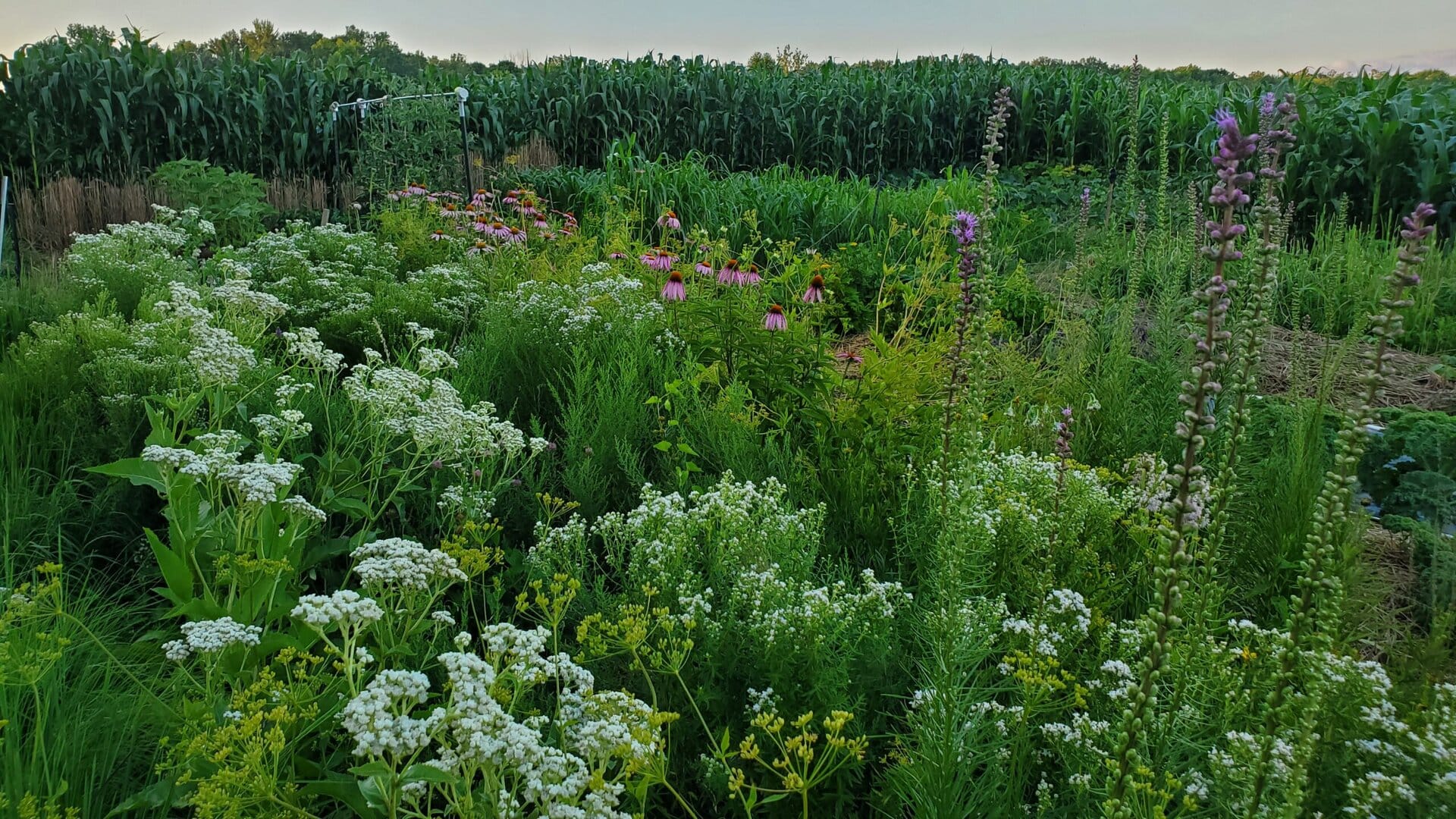
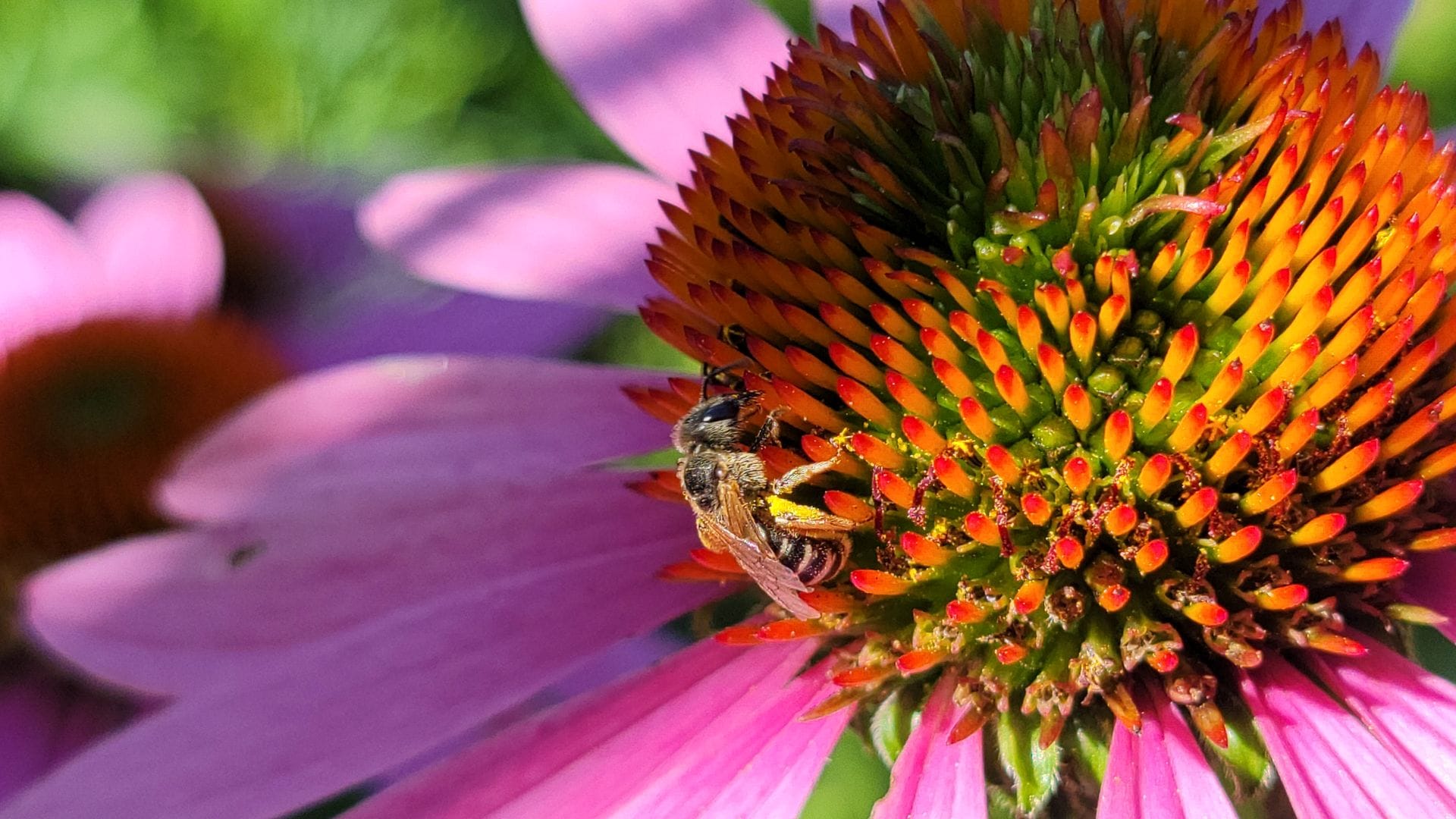
At the Marion County SWCD Demonstration Garden, fifteen growing beds of vegetables and cover crops are supported by a native planting designed to provide habitat for beneficial insects and pollinators. Established in the spring of 2019, the native planting has become an integral part of the garden system, offering food, shelter, and overwintering habitat for a wide variety of insects. Native flowering plants supply nectar and pollen throughout the growing season, helping to sustain pollinators as well as insects that contribute to natural pest management.
The native planting also serves as an example of how conservation practices can be incorporated into working gardens. By supporting insect diversity, it enhances pollination in the vegetable beds and contributes to overall garden health. On summer evenings, fireflies are often visible throughout the planting, highlighting the value of diverse, undisturbed habitat within an actively managed garden.
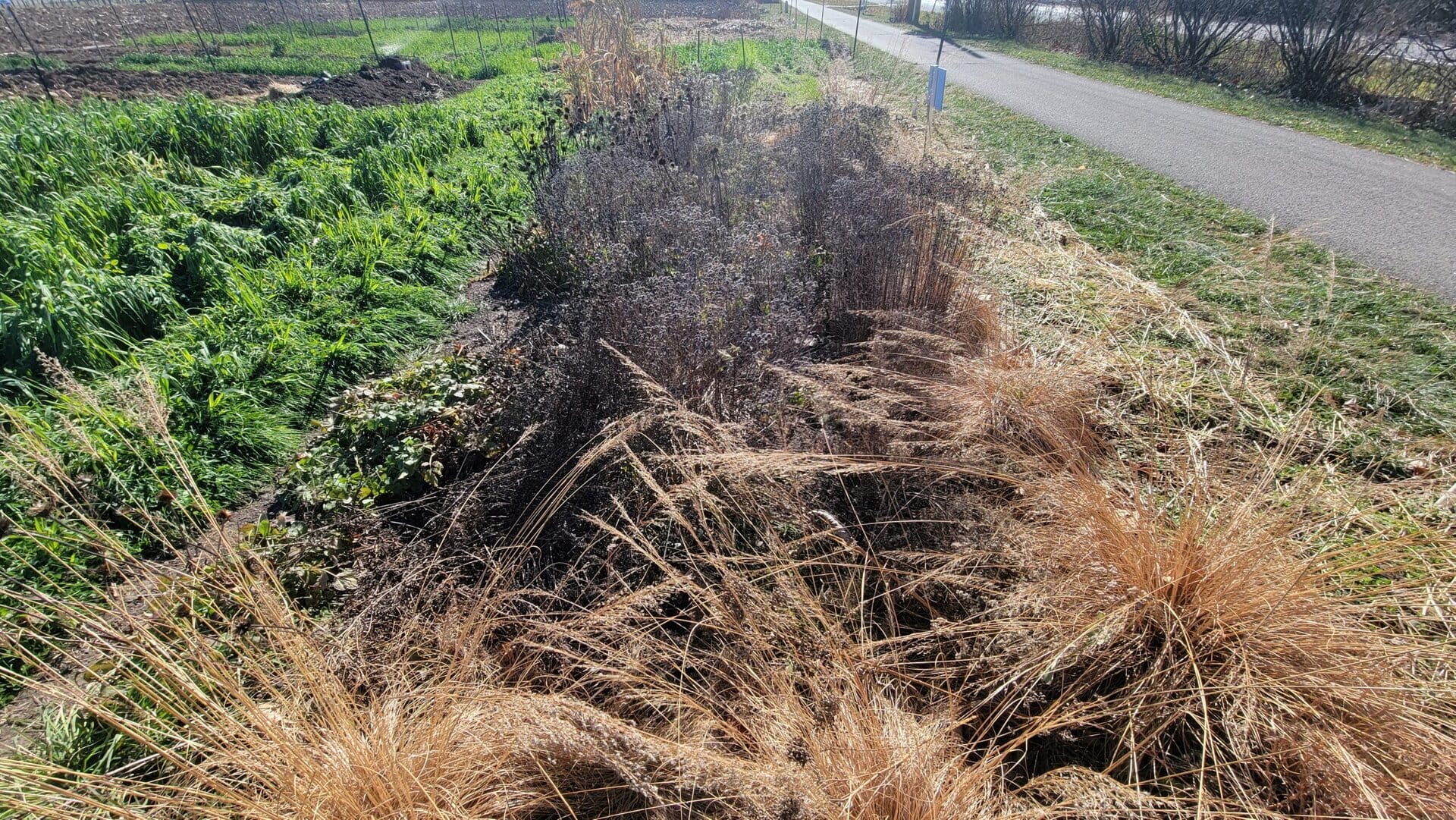
Native planting in winter
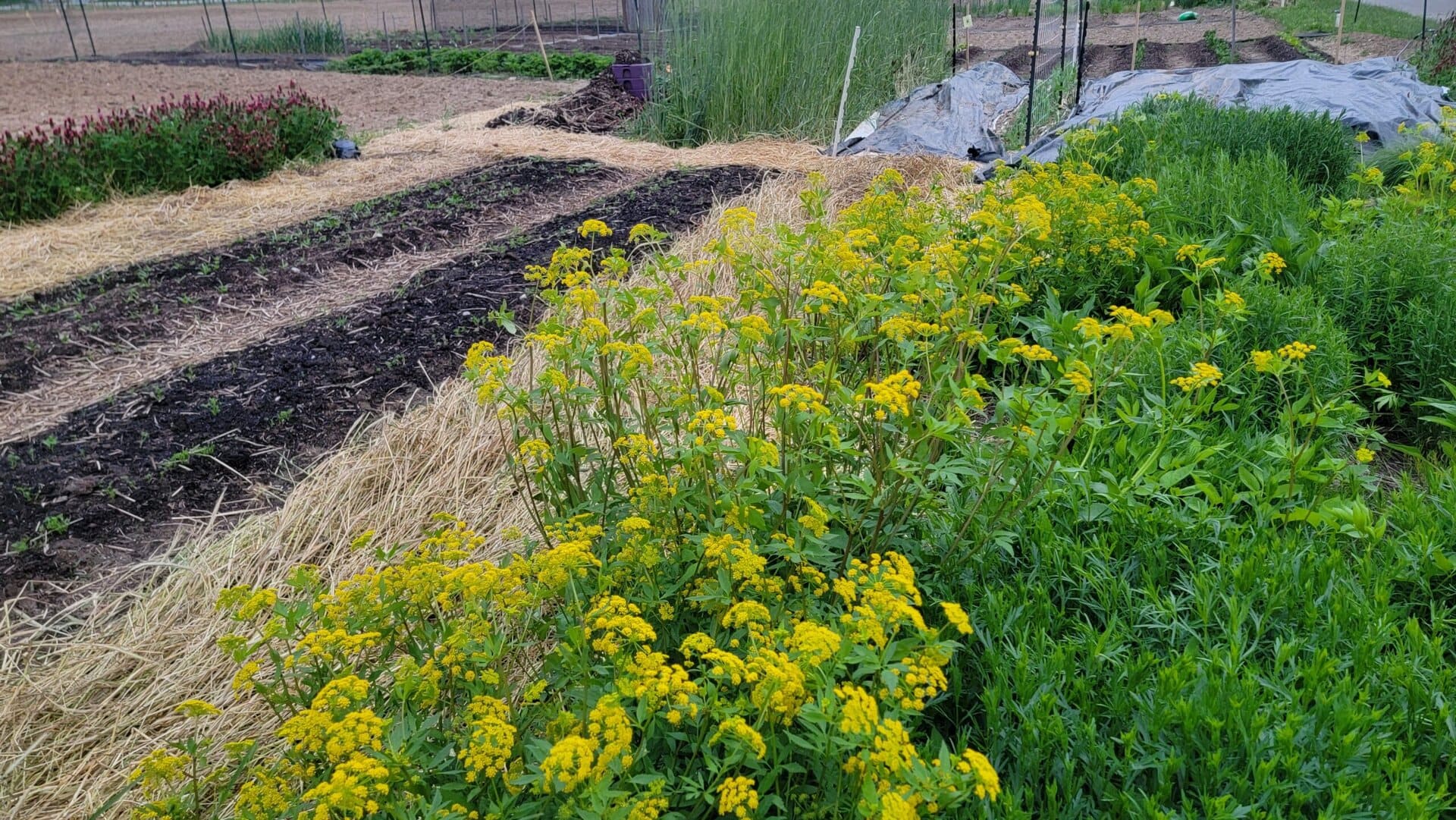
Golden Alexanders blooming in spring
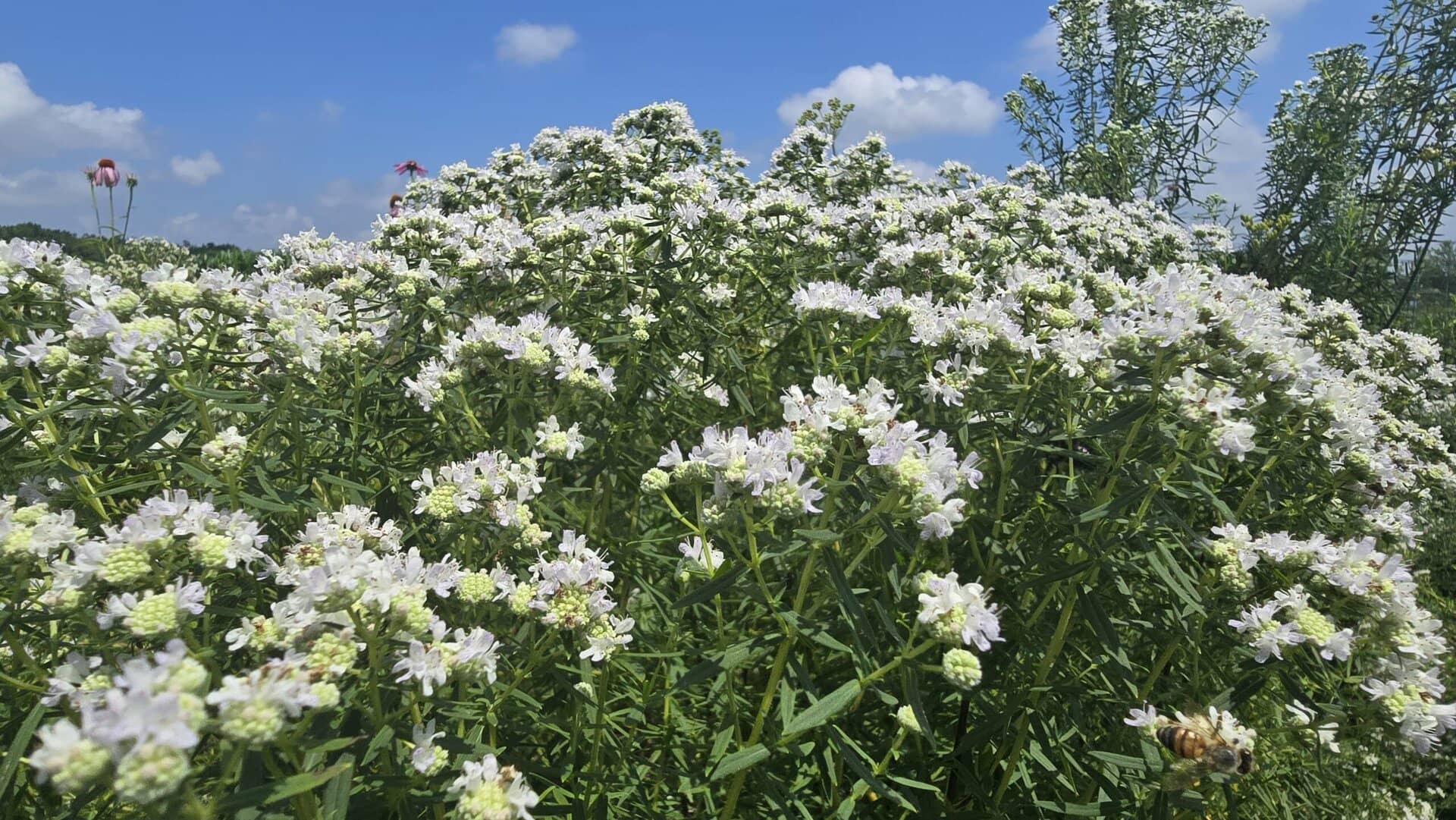
Mountain Mint
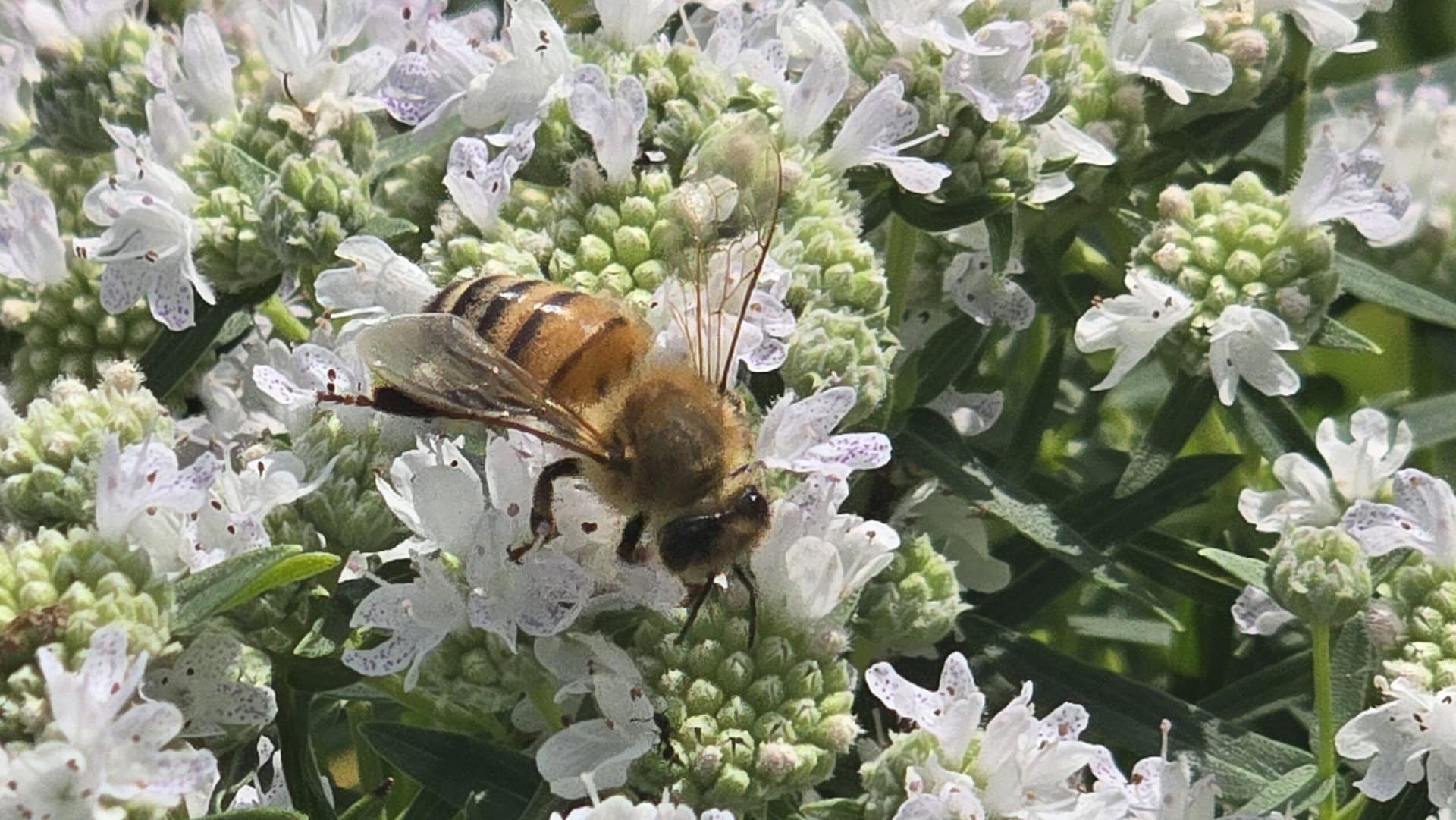
White flowers attracting bees and wasps
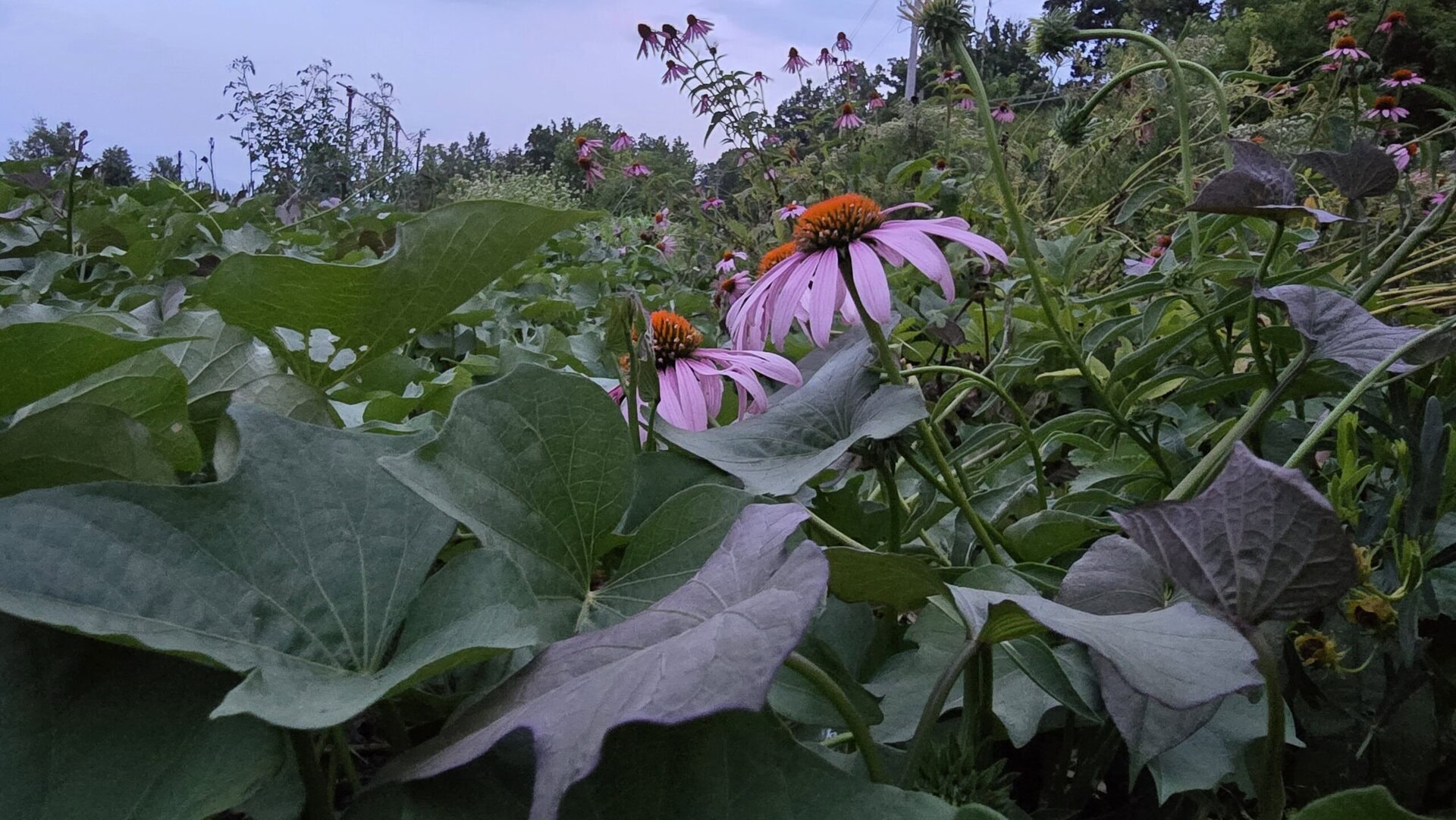
Native planting adjacent to sweet potatoes